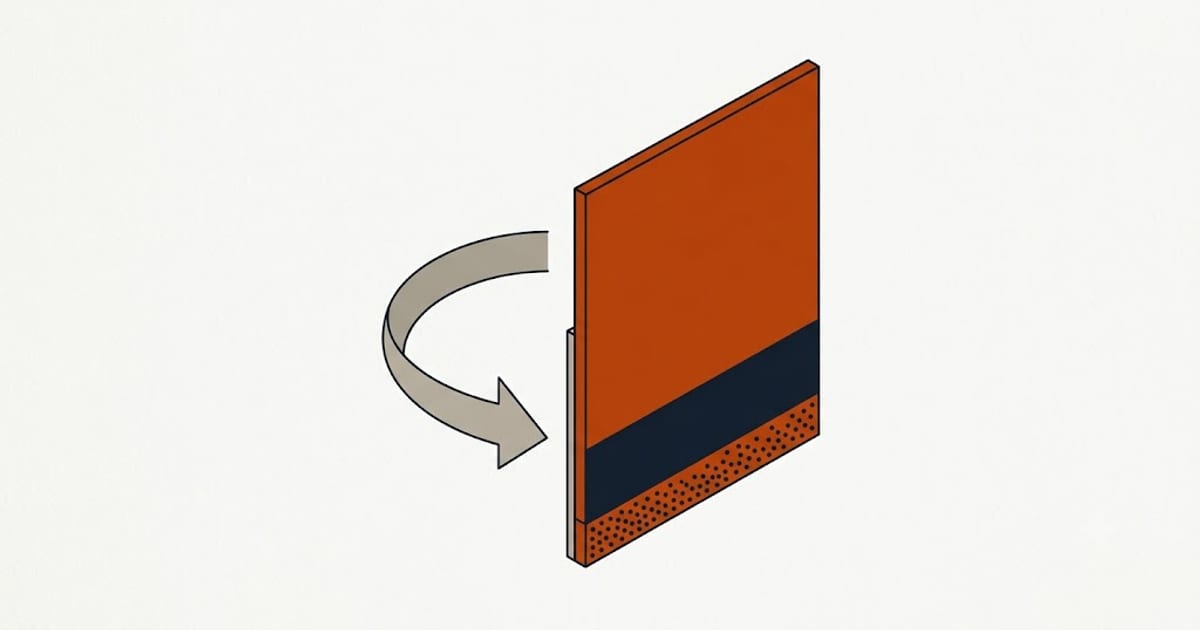
New windows go in, and within a few cold weeks there is water running down the glass every morning. It looks like a defect. It almost never is.
First: which surface?
This is the whole diagnosis, and it takes three seconds.
Inside face, room side. The most common, and it is about the house, not the window. Read on.
Outside face, exterior. Dew forming on the outer glass on a clear morning. This is a sign the window is working well — the outer pane is cold because so little heat is escaping through it. Nothing to fix.
Between the panes. Wipe it; if it does not come off, the sealed unit has failed. That is a component fault and usually a warranty claim.
Why new windows produce condensation the old ones did not
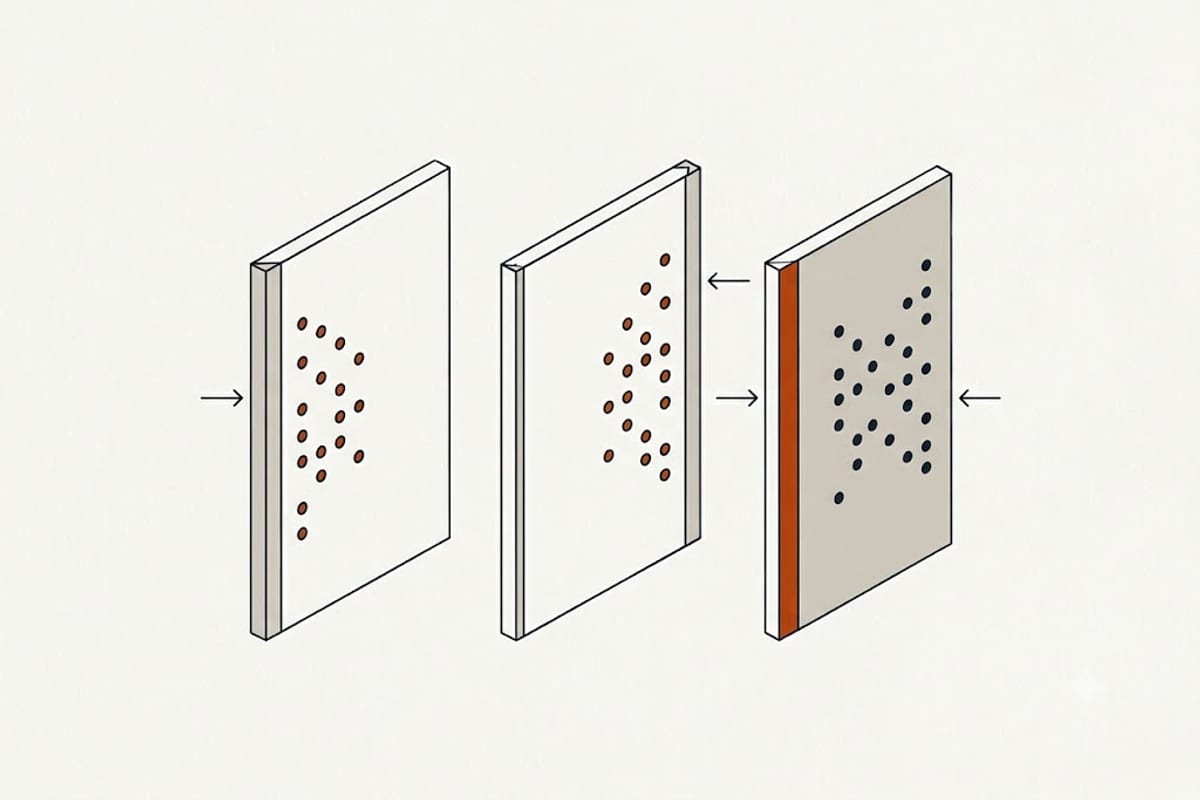
Old windows leaked. Continuously, all winter, whether you wanted it or not — and that leakage carried moisture out of the house.
New windows stop that. Every litre of water your household produces now stays indoors: showers, cooking, laundry, houseplants, and the two to three litres a day that four people exhale and perspire. Indoor humidity rises, and the glass — still the coldest surface in the room — is where it shows first.
The condensation is a symptom of the house being tighter. That is what you bought.
The number that governs it
Indoor relative humidity against outdoor temperature. Rough targets to avoid condensation on a decent double-glazed window:
| Outdoor temperature | Keep indoor RH below |
|---|---|
| 20°F | 35% |
| 10°F | 30% |
| 0°F | 25% |
| −10°F | 20% |
| −20°F | 15% |
A $15 hygrometer tells you where you are. Most houses with this complaint are sitting at 45 to 55%.
What to do about it
Run the bathroom fan properly. During the shower and for twenty minutes after — a timer switch is the cheapest fix on this page. Confirm it actually vents outside and not into the attic, which is more common than it should be.
Use the kitchen hood, ducted outdoors. Boiling and simmering put a surprising amount of water into the air.
Vent the dryer outside and check the duct is not disconnected.
Cover a crawlspace floor with plastic sheeting. Bare earth under a house evaporates gallons a day upward into it, and this is a large hidden source in older homes.
Stop humidifying. Whole-house humidifiers fitted to the furnace commonly run at a setpoint chosen for a leakier house. After a window replacement, that setting is usually too high.
Move air across the glass. Open blinds and curtains, and pull furniture back from windows. A closed heavy curtain makes the glass colder and the condensation worse.
When it is genuinely the window
Only on some windows, in the same room, with the same conditions. Points at those specific units — a lower-performing glass package, or a frame with poor thermal break.
Condensation on the frame rather than the glass, particularly on metal. Aluminium without a thermal break is dramatically colder than the glass beside it, and no humidity control will keep it dry in a cold climate.
Water at the bottom corners with no fog on the glass. That is water getting in, not water condensing — a flashing or sealing failure at the install, and it is the one on this list that damages the building.
Recurring condensation in a room with a bathroom fan running and RH under 35%. At that point the moisture load is not ordinary and it is worth looking for a leak.
The order to work through it
- Identify the surface — inside, outside, or between.
- Buy a hygrometer and read the room.
- Compare against the table above.
- Fix ventilation before considering anything about the windows.
- If RH is already low and it persists on specific units, that is when to call the installer.