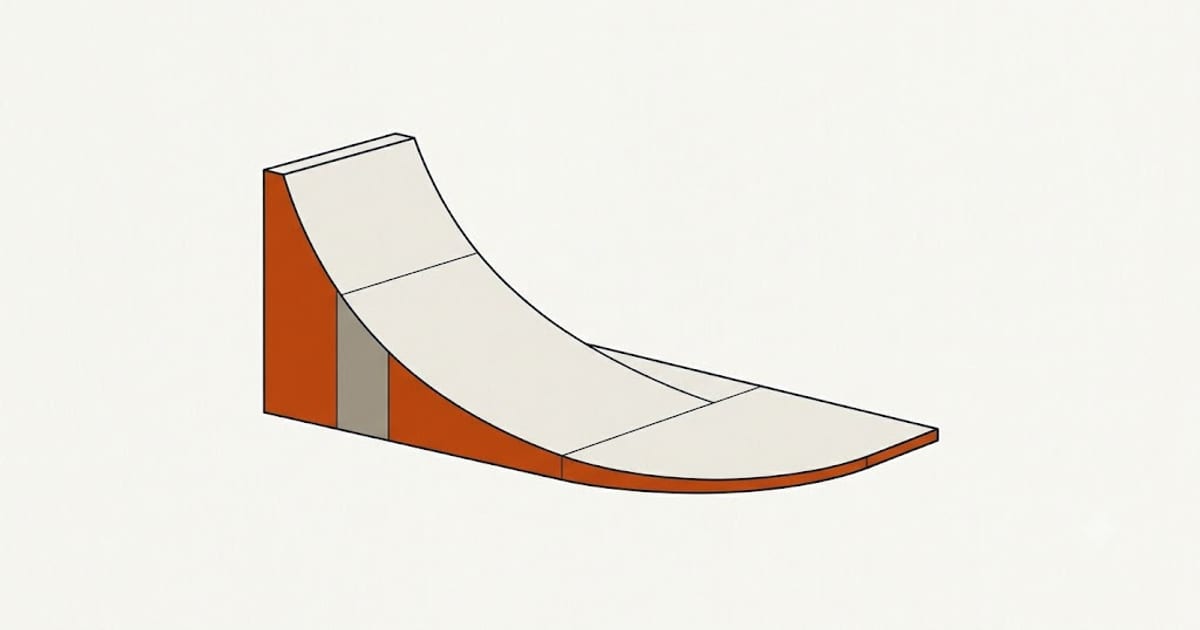
U-factor is the rate at which heat passes through the whole window assembly — glass, spacer, sash and frame together — per square foot, per degree of temperature difference, per hour. Lower is better, and the scale runs from about 1.20 for single-pane clear glass down to about 0.15 for a high-end triple.
What each range means
| U-factor | What it typically is |
|---|---|
| 0.90–1.20 | Single pane, clear glass |
| 0.45–0.55 | Double pane, clear, aluminium frame |
| 0.30–0.35 | Double pane, one low-E coating, vinyl frame |
| 0.25–0.30 | Double pane, better coating, argon, warm-edge spacer |
| 0.18–0.24 | Triple pane, or a very good double |
| 0.14–0.18 | High-end triple, krypton fill |
The gains flatten, and they flatten early
Heat loss is proportional to U-factor, so each step down saves a fixed fraction of what is left — which means the first steps are worth far more than the later ones.
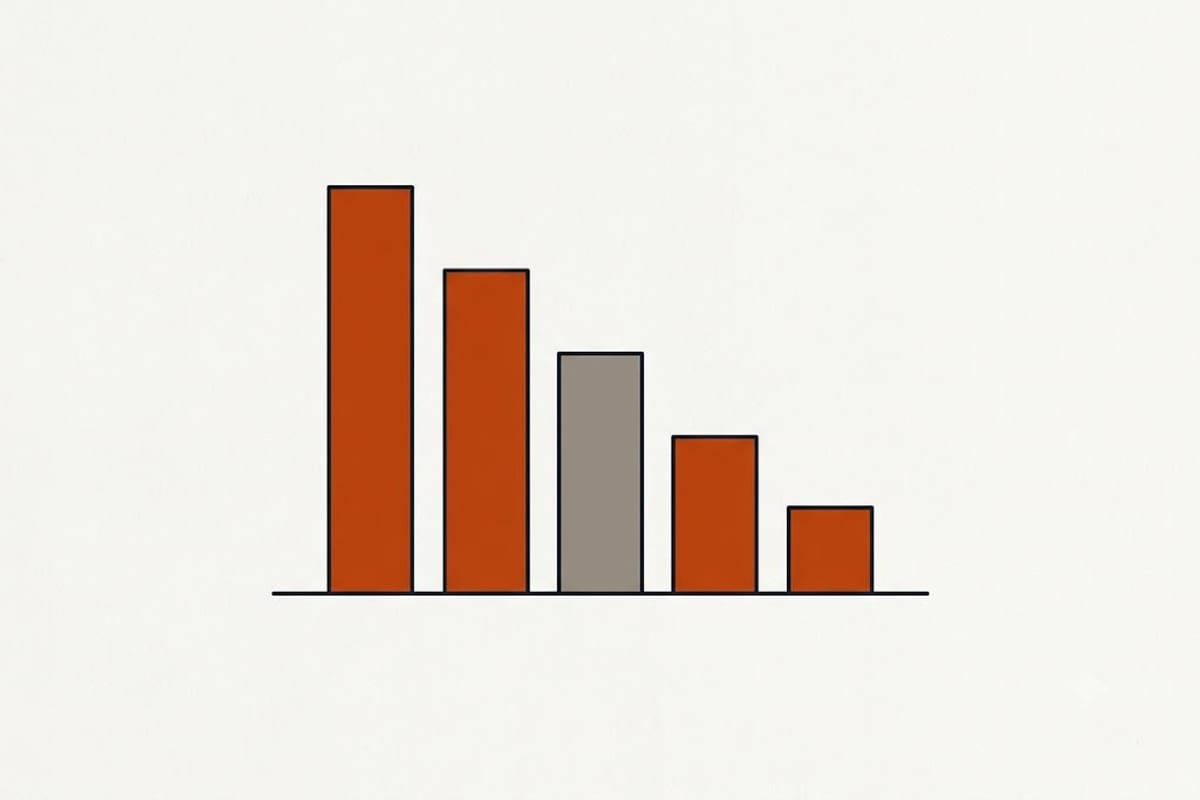
Going from 1.00 to 0.50 cuts heat loss through the window in half. Going from 0.50 to 0.30 cuts what remains by 40%. Going from 0.30 to 0.25 cuts it by 17%, and by then the window is a small part of the whole-house heat loss anyway.
That last step is usually where the price goes from a double to a triple. In a cold climate it can still be right; in a mild one the arithmetic rarely gets there.
U-factor is for the whole window, not the glass
This trips people up constantly. Manufacturers can quote a centre-of-glass U-factor, which is always better than the whole-window number, because it ignores the edge of the glass, the spacer and the frame.
The NFRC label always shows the whole-window figure. If a brochure quotes 0.20 and the label says 0.28, both may be true and only one of them is the window you receive.
The frame matters more than most people expect. The same glass package in a thermally broken fiberglass frame and in a plain aluminium frame can differ by 0.10 or more in the whole-window number.
Fixed windows always beat operating ones
A picture window has no sash meeting the frame, no weatherstripping line and less frame per square foot of glass. Within one product line, the fixed unit is routinely 0.03 to 0.05 better than the casement, and the casement better than the slider.
A quote that lists one U-factor for a house with eight different window types is quoting the best one.
The number that matters in a hot climate is the other one
In cooling-dominated climates, the heat that comes in through the glass as sunlight is a much larger load than the heat that conducts through the frame. That is SHGC, not U-factor, and it is the number to optimise first in the south.
ENERGY STAR reflects this: the Southern zone allows a U-factor of 0.32 — looser than the north — while capping SHGC at 0.23.
Where the money actually goes
If the object is comfort and bills rather than a label, spend in this order:
- Air leakage. A window with a bad AL rating or a bad installation leaks more energy than a mediocre U-factor loses. The draught you feel is almost always air, not conduction.
- The first step down in U-factor, from single or clear-double to a decent low-E double.
- SHGC tuned to the climate — low in the south, high on south-facing glass in the north.
- The second step down in U-factor, to a triple. Last, and only in a cold climate.
Reversing that order is the usual way a window budget gets spent without the house feeling different.