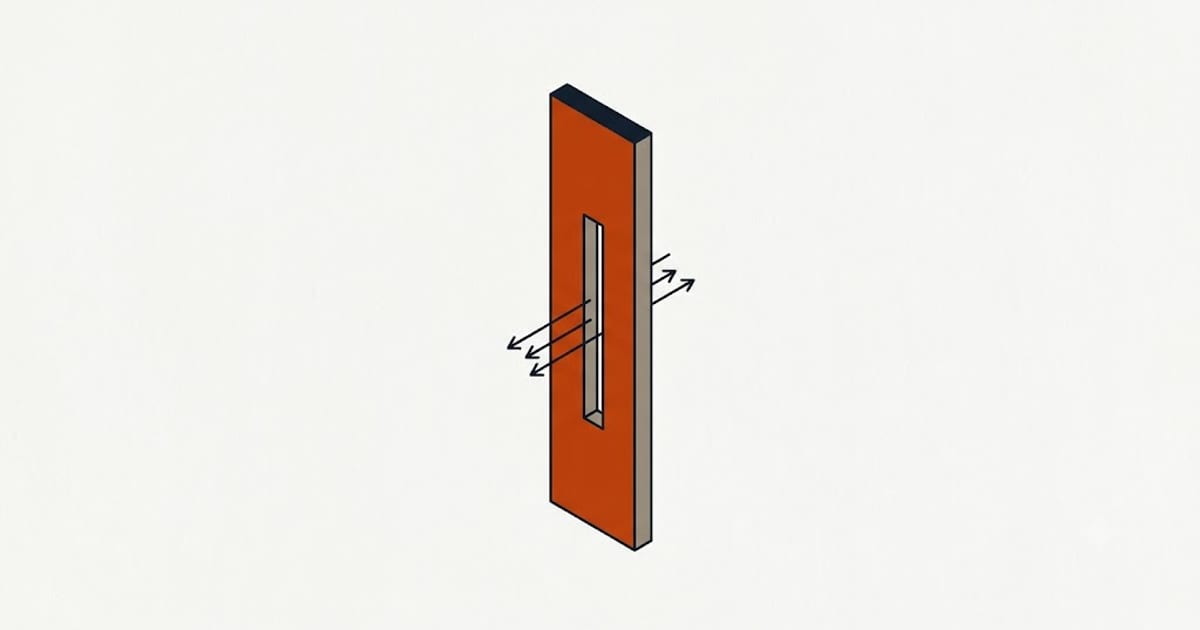
Heat leaves a house two ways. It conducts through solid material, which is what U-factor measures, and it moves with air through gaps, which is what air leakage measures.
People feel the second one. The cold ribbon at ankle height, the curtain that stirs on a still evening, the room that never quite warms — that is air, and no U-factor explains it.
The rating
AL on the NFRC label, in cubic feet per minute per square foot of window, tested under a standard pressure difference. The certification ceiling is 0.3; good units come in at 0.1 or below, and the best fixed units are lower still.
The number is rarely quoted in a sales conversation and it is on every label.
Operating type decides most of it

Sealing depends on how the sash meets the frame, and that is a function of the mechanism rather than the brand.
Fixed units have no moving joint at all and leak least.
Casement and awning windows crank shut and pull the sash against a compression seal all the way round. When the lock engages, the gasket is squeezed. These are the tightest operating windows made.
Double and single hung slide vertically, so the seal has to be a sliding one at the jambs and a compression one only at the meeting rail. Better than a slider, worse than a casement.
Horizontal sliders run on a track with a sliding seal on all sides. Physically the hardest type to seal, and consistently the leakiest.
If a room is uncomfortable and the windows are sliders, the operating type is a bigger lever than any glass upgrade.
Wind direction matters, which is why it feels intermittent
The rating is measured at a fixed pressure. Real wind is not fixed, and it pressurises one side of the house while depressurising the other.
This is why a window seems fine for weeks and then, on a particular windy night from a particular direction, feels terrible. Nothing changed about the window. The pressure across it changed.
The installed gap leaks too, and it is not on the label
The AL rating covers the manufactured unit. The gap between the window frame and the rough opening is site work, and an unsealed gap around a window leaks more than the window does.
The rating is therefore a ceiling on performance, not a prediction of it. A 0.05 window installed without perimeter sealing behaves like a much worse one.
Finding leaks without equipment
On a cold windy day, run the back of a hand slowly around the inside of the casing and along the sash line. Skin detects moving air far better than it detects temperature.
A lit incense stick does the same job visibly. Move it slowly along the perimeter and watch for the smoke to be pulled or pushed sideways.
Check the sash line and the casing separately. Movement at the sash is a weatherstrip or lock problem — cheap. Movement at the casing is an installation problem — hidden behind trim, and worth knowing about before it is blamed on the window.
What to do
Fix the lock and the weatherstrip first; both are inexpensive and both are often the whole story. If the leak is at the casing, the trim has to come off to seal the gap, which is worth doing on the worst two or three windows in the house rather than all of them.
And when comparing quotes, ask for the AL number alongside the U-factor. A supplier who has it to hand is reading the same label you are.