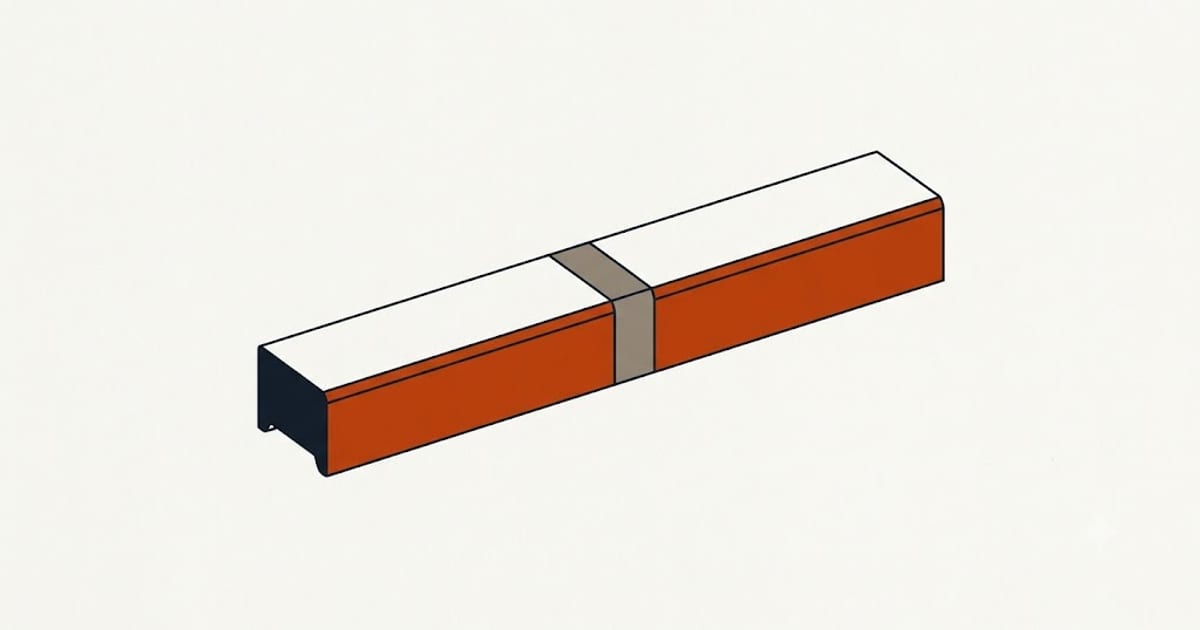
Aluminium is strong, dimensionally stable, takes a durable factory finish and allows the narrowest frames of any material. It is also one of the best thermal conductors used in building — orders of magnitude better than vinyl, wood or fiberglass.
In a window frame, "good conductor" means "heat leaves here."
What a thermal break does
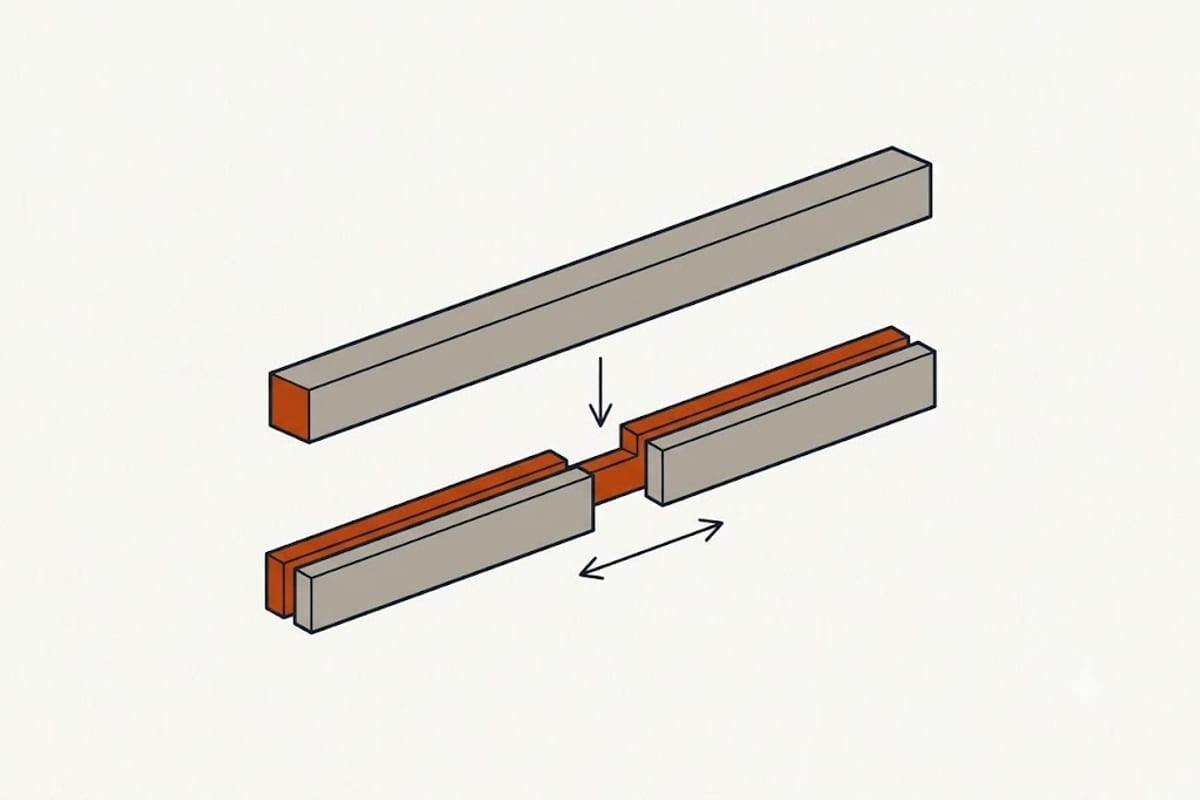
A thermally broken frame is two aluminium sections joined by a strip of low-conductivity polymer — usually polyamide or poured-and-debridged polyurethane — running the full perimeter. The metal on the inside never touches the metal on the outside.
Without it, the frame is a continuous metal path from a 10°F exterior to a 70°F room. Whole-window U-factors for unbroken aluminium residential frames sit in the range of 0.60 to 1.00 no matter what glass goes in them, because the frame swamps the glazing.
With a proper break, the same glass package can reach the 0.30s, and commercial systems with deep breaks go further.
The symptom is condensation, not the bill
An unbroken aluminium frame runs close to outdoor temperature on its interior face. On a cold night that surface is below the dew point of ordinary indoor air, and water condenses along the frame and runs down onto the sill.
This is the classic 1970s aluminium window behaviour, and it is not a defect. It is what a conductor does. Over years the standing water damages the sill and the wall below it, which is frequently the actual reason those windows get replaced.
Condensation resistance is on the NFRC label where the manufacturer chooses to report it, and on aluminium it is the number to look at first.
Where aluminium is the right choice
Large openings and narrow sightlines. Aluminium spans further with less frame than any alternative. A wall of glass with slim frames is an aluminium job — vinyl needs reinforcement and visible bulk to do the same span.
Coastal and high-wind zones, where structural performance under pressure matters and impact-rated systems are common in aluminium.
Hot climates, where heating loss is a minor load and SHGC is the number that matters. In Florida or south Texas, a thermally broken aluminium window with good solar-control glass is a reasonable specification.
Commercial and modern-design houses, where the aesthetic is the point and the budget accepts a high-performance system.
Where it is the wrong choice
Cold climates on a budget. A cheap unbroken aluminium window in a heating climate will condense, will feel cold, and will lose more through the frame than the glass saves.
Anywhere the frame is a large share of the opening. Small windows have proportionally more frame, so the frame's conductivity matters more. On a bathroom window, an unbroken aluminium frame can dominate the whole-window number.
What to ask
The single question is whether the system is thermally broken, and the follow-up is what the whole-window U-factor is on the NFRC label — not the centre-of-glass figure, which hides exactly this problem.
A supplier who answers "it has insulated glass" has answered a different question. Insulated glass in an unbroken frame is a good window in a bad frame, and the label will show it.
Finishes last, and that is the real advantage
Anodised and factory-applied fluoropolymer finishes on aluminium outlast paint on anything else by a wide margin, hold dark colours without the expansion problems vinyl has, and do not chalk the way older powder coats did.
Where a house needs dark frames on a sunny elevation and the budget allows a broken system, aluminium solves a problem the other materials handle badly.